FEATURED RESOURCE
Snow and Ice on Your Trailer: New Truck Fines Explained
Flying ice from a trailer roof can now cost a truck driver real money. Here's what's changed and what you can do about it.
- Driver Insights
- 4 min read
- October 22, 2026
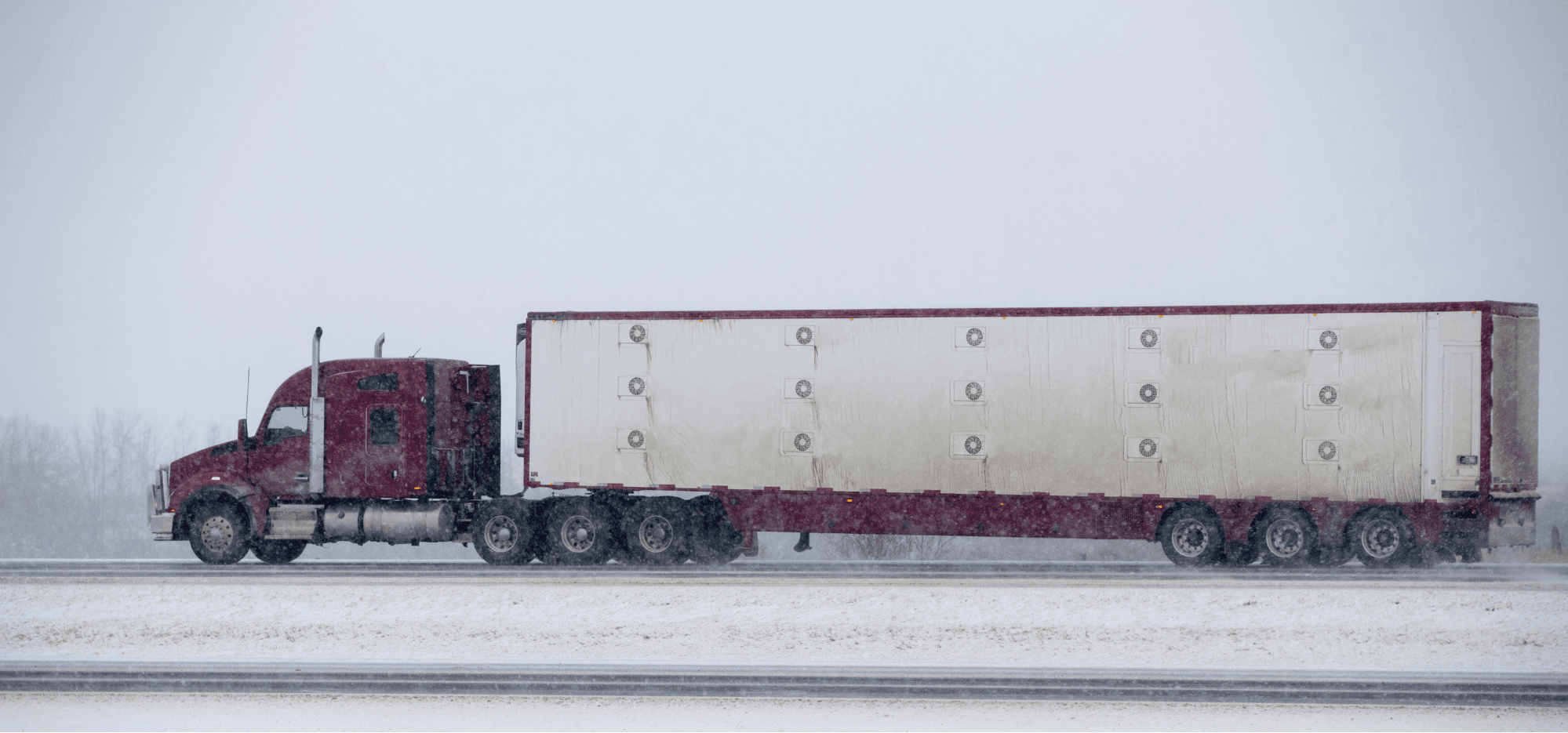
Cold weather is close, and a lot of drivers are about to deal with something they'd rather not think about: the snow and ice sitting on top of the trailer. So, do truckers have to clear snow off the trailer? In a growing number of states, yes, you're expected to make a real effort. And if a sheet of ice lets go on the highway and hits another vehicle, the fine for a truck driver is a lot higher than the one for a regular car. Delaware just signed a new law, and Maryland's rule started on Oct. 1. Here's what each state says, where the fines land, and what you can realistically do when you're standing next to a tall trailer in the cold.
1. What Delaware changed
Delaware's new law is already in effect. Police can now stop a vehicle that's covered in snow or ice if it looks like a danger to others. The basic fine runs $25 to $75.
If flying snow or ice causes a crash or injury, the penalty goes way up: as much as $1,000 for regular drivers and up to $1,500 for truck drivers. There's one small break. You can only be cited once every 24 hours, and snow that piles up on you during a trip doesn't count against you.
2. What Maryland changed
Maryland's rule started Oct. 1. Drivers have to make reasonable efforts to clear snow and ice from all exposed surfaces: hood, roof, trunk, windshield. For big trucks, that includes the top of the trailer. Fines start at $75 for large trucks.
Police can't pull you over just for this, but they can write it up if they've stopped you for something else. If the snow or ice causes a crash, injury, or death, the fine for a truck driver goes up to $1,500. And there's a safety out: you won't be cited if clearing the truck would break workplace safety rules or put you in danger.
3. Other states with rules
Delaware and Maryland aren't alone. Land Line lists Alabama, Connecticut, Georgia, Iowa, Maine, Maryland, Michigan, New Hampshire, New Jersey, Pennsylvania, Rhode Island and Wisconsin as states with snow and ice removal requirements. Other states don't have a specific law but can still ticket you under unsafe driving or load securement rules.
So if you run OTR through several states, you can't assume what's fine in one place is fine in the next. Check before you go.
4. The real problem: nowhere to do it
Ask any trucker and they'll tell you the hard part. A car takes two minutes. A tractor-trailer is a different animal. The top of a trailer is out of reach from the ground, and climbing on it in the cold is its own risk.
Land Line's reporting points out there aren't enough truck washes, drive-through scrapers or other places set up for trucks to clear ice safely. The article argues states should put in safe, easy-to-reach spots along with tougher penalties. Until that happens, many drivers are stuck doing the best they can.
5. What you can do this winter
You don't have to be a hero. A few simple habits help:
Clear what you can reach safely before you pull out, especially the front edge and any loose sheets of snow.
Look at the roof again after a thaw or when temps swing. Ice can break loose later.
If a truck wash, shop or yard near you has a way to do it safely, use it.
Never take a fall risk to clear a roof. Maryland's rule itself allows for that.
Tell dispatch or your safety department when you can't get it done safely. A note in the system helps if there's a question later.
6. What's still unclear
A lot. The rules read differently state to state, and the articles don't say how often tickets are actually being written. It's also not clear how courts will treat a "reasonable effort" when a trailer roof is out of reach. This is news, not legal advice. For your own situation, check with your carrier and the state agencies where you run.
Wrap-up
Winter driving is already hard enough without a ticket for ice you couldn't safely reach. The best move is to know the rules on your lanes, plan where you'll clear the roof, and speak up if your carrier hasn't made that easy.
How a carrier handles winter equipment, wash access and safety matters as much as the pay. It's worth asking before you sign on.
Ready to Get Matched With the Right Job?
It’s free, and it only takes a few minutes. Tell us what you’re looking for and we’ll find trucking companies that want a driver like you.